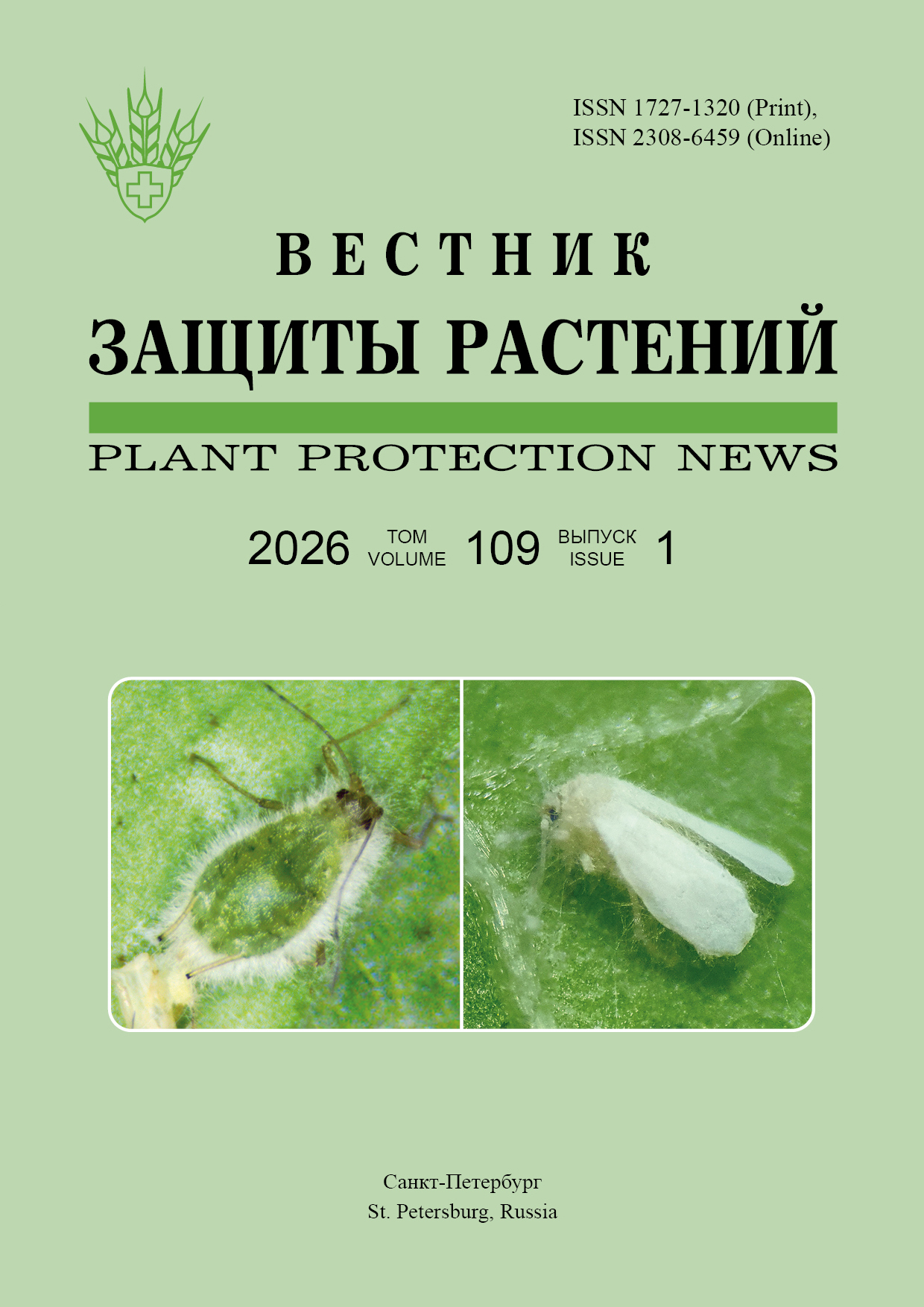
Molecular genetic analysis of new natural isolates of Lecanicillium-like fungi and study of their pathogenic properties
Keywords:
biological control, entomopathogenic fungi, Akanthomyces, Myzus persicae, Trialeurodes vaporariorum, molecular identificationAbstract
The widespread use of chemical insecticides in agriculture is associated with numerous adverse effects, which substantiates the necessity of biological plant protection development. Entomopathogenic fungi are considered as promising biocontrol agents against arthropod pests. This study aimed to isolate and characterize new natural isolates of Lecanicillium-like fungi discovered in Russia and to evaluate their virulence against two dangerous sucking pests: the peach aphid Myzus persicae and the greenhouse whitefly Trialeurodes vaporariorum. Thirty isolates collected from various regions of Russia in 2019–2022 were identified using molecular genetic methods targeting the ITS, TEF, and NAD1 loci. The isolates were identified as Akanthomyces lecanii, A. muscarius, A. attenuatus, A. uredinophilus, Flavocillium bifurcatum, and Simplicillium lanosoniveum. Flavocillium bifurcatum being recorded in Russia for the first time. Laboratory bioassays revealed high variability in isolate virulence. Twenty two isolates demonstrated over 90 % biological efficacy on the 7 day against M. persicae, among them 16 isolates achieved 100 % efficacy. From 22 tested isolates 15 showed over 80 % efficacy towards T. vaporariorum. The most promising isolates belong to the species A. uredinophilus, A. muscarius, A. attenuatus, and F. bifurcatum. The latter was tested against both target pests for the first time. Consequently, 15 highly virulent isolates were selected as promising agents for the control of aphids and whiteflies.